Streamlining Your Amazon Publishing Journey with Kdp Book Templates
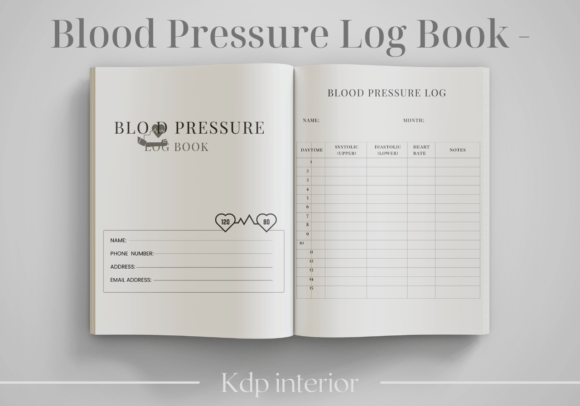
For many aspiring authors and self-published creators, the technical hurdles of formatting a book can be the final barrier before publication. Amazon’s Kindle Direct Publishing (KDP) platform democratizes publishing, but the requirement for a perfectly formatted interior file—with specific dimensions, bleed settings, and page counts—can be daunting. This is where professionally designed Kdp Book templates, like the ready-to-use blood pressure log book interior, become invaluable tools. They transform a complex technical process into a simple, upload-ready step.
What Exactly is a Kdp Book Interior Template?
Think of a Kdp Book template as the complete, pre-formatted skeleton of your book’s interior pages. It’s not a cover design, but everything inside: the layout, page numbering, margins, and structure. The provided specifications—such as 8.5" x 11" inches, 121 pages, with bleed—are precisely configured to pass Amazon KDP’s automated file review without errors. The file is a tested, high-resolution PDF, meaning the creator has already uploaded and validated it within the KDP system, ensuring it meets all quality guidelines. This eliminates the risk of rejection due to formatting issues and saves countless hours of troubleshooting.
The Real-World Value of a Ready-to-Upload Design
The immediate benefit is sheer efficiency. Instead of learning desktop publishing software, calculating margins, or worrying about bleed settings for a paperback, you acquire a foundation that’s already complete. For a niche product like a blood pressure log book, the template also provides a functional, professional layout tailored to that specific use case. This allows entrepreneurs, health coaches, or even healthcare professionals to focus on their content and market strategy rather than technical design. The template embodies a plug-and-play approach to self-publishing, making it accessible to professionals, hobbyists, and business owners who may lack graphic design skills.
Key Applications Across Different Ventures
The utility of such a Kdp Book extends far beyond a single project. For the marketer or educator, it represents a rapid prototyping tool. Imagine creating a series of tailored journals or workbooks—a fitness log, a meal planner, a project tracker—each based on a similar, reliable template structure. The consistency across products builds a cohesive brand identity on your Amazon storefront. For freelancers offering publishing services to clients, a tested interior file is a trusted asset, guaranteeing delivery and reducing project risk.
Consider also the digital content creator or blogger looking to monetize their audience. Translating popular blog content into a paperback workbook becomes a feasible, low-overhead task with a pre-formatted interior. The template handles the arduous print-ready conversion, allowing the creator to simply insert their text and data into the designated pages. This bridges the gap between digital expertise and physical product creation.
Evaluating Quality and Fit for Your Project
When selecting any Kdp Book template, practical considerations are crucial. First, verify the specifications match your intended print size. The common 8.5" x 11" inch size is ideal for many workbooks and journals. Confirm the page count aligns with your content needs; 121 pages offers ample space for a detailed log book with introductory material, instructions, and daily entry pages. The mention of “bleed” is critical for books where design elements extend to the edge of the page; a template with bleed properly configured prevents unwanted white borders.
Most importantly, the claim that the file is tested on Amazon KDP is a key quality indicator. It means the upload process has been validated, reducing your technical uncertainty. Remember, as the description notes, this is for the interior only. The cover design is a separate and essential component, but starting with a rock-solid interior simplifies the next step of commissioning or creating a complementary cover.
From Template to Tangible Product: A Use Case
Let’s observe the journey of using the blood pressure log book Kdp Book. A cardiology nurse, for instance, wants to publish a companion log book for her patients to track readings between appointments. She purchases the ready-to-upload PDF. Her work is now purely content-focused: she might adjust introductory text, fine-tune the explanatory headers, or add a few pages of dietary tips. She does not need to adjust page size, worry about margins shifting, or stress about PDF resolution. Once her content is placed, she uploads the PDF to KDP’s interior section, where it passes instantly. She then designs a simple, clear cover through KDP’s cover creator or a separate service. Within days, her professional, patient-friendly log book is live for sale, a process that might otherwise have taken weeks of learning and frustration.
This example underscores the template’s role in enhancing user experience—both for the publisher and the end customer. The publisher enjoys a smooth, productive process. The customer receives a product that feels professionally crafted, with clean typography and a logical layout, which is especially important for a functional health tracking tool where clarity is paramount.
Building a Publishing Asset Library
For the serious self-publisher, a collection of varied Kdp Book templates becomes a strategic asset. Each tested interior file for different genres (journals, planners, activity books) accelerates the development of a product portfolio. It enables rapid response to market trends or audience requests. The initial investment in a reliable, affordable template pays dividends across multiple projects, establishing a foundation of quality and reliability in your publishing workflow. It embodies the principle of working smarter, not harder, by leveraging pre-built, expert resources to elevate your own creative and commercial output.
Ultimately, tools like this specific blood pressure log book interior democratize quality. They ensure that any motivated individual—regardless of technical background—can produce a book that looks and functions as if it came from a professional publishing house. By removing the biggest technical roadblock, they empower creators to channel their energy into what truly matters: the content, the audience, and the business of sharing their work with the world.