The Daily To-Do List: Your Foundation for Organized Execution
The simplest tools are often the most powerful. At the heart of any productive workflow, whether managing a business, completing a creative project, or organizing daily life, lies the humble daily to-do list. It is not merely a piece of paper or a digital note; it is the operational map for your day, transforming intentions into actionable steps. A daily to-do list serves as the critical interface between your broader plans—weekly agendas, project timelines, or long-term goals—and the tangible work of the present moment.
Defining Your Daily To-Do List Within a Larger System
A daily to-do list is a focused, time-bound inventory of tasks intended for completion within a single day. Its effectiveness depends entirely on its integration into a larger organizational process. For the professional, it might be populated from a weekly review of a project management platform. For the entrepreneur, it could distill objectives from a quarterly business plan into daily executable actions. For the hobbyist, it might translate a broader creative vision into specific, manageable steps. The list itself is the final, tactical stage of planning, where strategy meets execution.
Using a daily to-do list effectively requires considering its role before, during, and after your primary work blocks. Before you begin, the list acts as a preparation tool, forcing clarity and prioritization. During your work, it becomes a guiding document, keeping you aligned and reducing mental clutter. After your work session, it serves as a review mechanism, providing insight into your efficiency and paving the way for tomorrow’s planning. This cyclical use turns a static list into a dynamic component of your personal productivity system.
The Anatomy of an Effective Daily To-Do List
Not all lists are created equal. An effective daily to-do list balances structure with flexibility. Many users find value in customizing headers to match their specific workflow needs—separating “Client Calls,” “Creative Development,” “Administrative,” and “Personal” tasks, for example. This segmentation aligns the tool directly with your roles and responsibilities. The physical or digital format of the list also plays a key role in its usability. A well-designed daily to-do list printable, for instance, offers consistency and a tactile experience that many find grounding.
Consider the interaction between your daily to-do list and other tools. It often works in concert with calendars (for scheduling), project management software (for tracking larger milestones), note-taking apps (for capturing details), and communication platforms (for collaborative tasks). Your list becomes the daily “pull” from these broader reservoirs of information. For a marketer, a task like “draft blog post for Campaign X” on the daily list originates from a content calendar housed in a shared spreadsheet. This interconnection ensures your daily efforts are never isolated but are always contributing to a bigger picture.
Practical Implementation: Integrating the List into Your Routine
Integration is where the concept becomes reality. Start by establishing a consistent creation ritual. For many, this is a five-minute session at the end of the previous workday or first thing in the morning. Pull tasks from your weekly plan, ongoing projects, and any new incoming priorities. Be realistic about capacity; a list with 20 items is less likely to be completed than a focused list of 5–7 critical tasks. This practice of curation is itself a skill that enhances decision-making and prioritization.
During execution, use your list actively. Check off items as you complete them, but also feel empowered to adapt. If a task proves more complex or a new urgent item emerges, the list should be a living document. You might annotate it, break a large item into sub-tasks, or reschedule something to the next day. This flexible use prevents the tool from becoming a source of rigidity or stress. After your workday, a brief review provides quality control. What was completed? What was deferred? What patterns are emerging? This reflection feeds directly into tomorrow’s list creation, creating a feedback loop for continuous improvement in your personal workflow.
Choosing and Customizing Your To-Do List Format
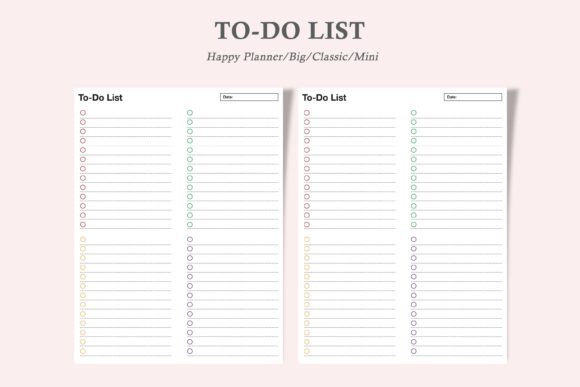
The medium matters. For those who prefer analog systems, a printable daily to-do list offers distinct advantages. It provides a physical artifact, separates work from screen-based distractions, and can be easily archived or displayed. The specifications of a printable, such as its size and design, directly impact its compatibility with your existing setup. For instance, a daily to-do list printable designed for the Happy Planner Big size (8.5” x 11”) fits standard binders and is easy to read, while a Mini version (4.5” x 7”) is portable and perfect for on-the-go professionals.
Key features of a good printable design include a professional, minimalist layout that is ink-friendly for frequent printing, and the flexibility to be used anew each day. A digital editable PDF download adds another layer of utility, allowing for customization before printing or even for use on tablets with note-taking apps. Having the same list available in multiple sizes—like Classic, Mini, and Big—ensures you can match the tool to your preferred planner ecosystem without altering your core list methodology. This consistency across formats supports long-term use and habit formation.
Workflow Examples Across Different Roles
To see the practical application, consider a few scenarios. A freelance graphic designer might begin their day by printing a new daily to-do list sheet. They customize the headers to “Active Projects,” “Client Communications,” and “Business Development.” Tasks are pulled from their project management tool (like Trello) and their email inbox. The physical list sits on their desk, guiding their focus through design work, email replies, and portfolio updates. At day’s end, the completed list is filed in their project folder, serving as a record of daily effort.
An educator planning a new curriculum unit could use a daily to-do list printable in their Happy Planner Classic. Their headers might be “Lesson Drafting,” “Resource Gathering,” and “Administrative.” Each day’s list contains specific steps from their overall unit plan. The list interacts with their digital lesson repository and their school’s calendar system. The act of writing and checking off tasks like “source images for Module 3” provides a sense of progress on a large, multi-week project. For a small business owner, the daily list is the command center for disparate operations, capturing tasks from accounting software, customer service platforms, and inventory systems into one unified action plan for the day.
The Long-Term Benefits of a Daily List Habit
Beyond the immediate organization of a single day, consistent use of a daily to-do list cultivates important meta-skills. It enhances your ability to estimate task duration and complexity, leading to better planning. It provides a clear record of output, which is invaluable for performance reviews, client billing, or personal reflection. It reduces the cognitive load of keeping tasks in your head, freeing mental energy for deeper work. Over time, this practice builds a sense of control and reduces the anxiety of overwhelming workloads.
Compatibility with your existing habits and tools is crucial for sustainability. A list that feels cumbersome or disconnected will be abandoned. Therefore, selecting or designing a list that fits seamlessly—whether it’s the right size for your planner, the right layout for your task types, or the right medium (printable vs. digital) for your environment—is a critical implementation step. The goal is for the list to feel like a natural extension of your thinking process, not an additional bureaucratic step.
Moving From List to Execution
The ultimate purpose of any daily to-do list is to facilitate execution. It bridges the gap between planning and doing. Therefore, its design should encourage action. Clear, concise task phrasing, visual check-off boxes, and a layout that prioritizes the most important items all serve this end. Remember, the list is a servant to your productivity, not its master. It should be adaptable, forgiving, and entirely focused on helping you move through your day with purpose and clarity. Whether you use a sophisticated digital tool or a simple blank daily to-do list printable, the principle remains: define the day’s work, execute it, review it, and repeat. That cycle, supported by a reliable tool, is the engine of consistent achievement.