The Classic Composition Notebook: Your Gateway to Ideas, Learning, and Profit
In a world dominated by digital screens and fleeting notifications, there exists a humble, steadfast companion for the thinker, the learner, and the creator: the composition notebook. With its instantly recognizable black-and-white marbled cover and sturdy sewn binding, this notebook is more than just a stationery item. It is a cultural icon, a tool for organization, and a surprisingly versatile platform for entrepreneurial creativity, especially in the realm of platforms like Amazon KDP (Kindle Direct Publishing). Understanding its enduring appeal and modern applications reveals why this simple notebook remains profoundly relevant in education, daily life, and business.
The Anatomy and Purpose of a Composition Notebook
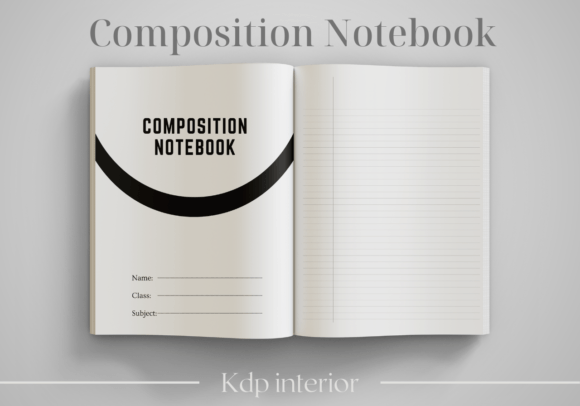
Let's start with the basics. A standard composition notebook is defined by its specific physical traits. Traditionally, it features a hardbound cover, most often with the classic marbled pattern, and contains around 100 sheets (200 pages) of college-ruled paper. The pages are sewn into the spine, making them far more durable than spiral-bound alternatives. The ruling—the “college-ruled” or medium-spaced lines—offers a balance between the wide lines of elementary school notebooks and the narrow lines of legal pads, making it suitable for a variety of handwriting sizes and purposes.
Its core purpose is composition—the act of putting thoughts, ideas, and information into a structured written form. Originally designed for school essays and assignments, its use has expansively evolved. It serves as a dedicated space for focused work, free from the distractions and multi-functionality of a digital device. Writing in a physical notebook engages different cognitive processes, aiding memory retention, creativity, and clarity of thought. This is its fundamental significance: it provides a tangible, permanent, and personal repository for the intangible process of thinking.
The Composition Notebook in Modern Life: Beyond the Classroom
While its roots are in education, the composition notebook has seamlessly integrated into adult life, work, and creative pursuits. It is the journal for the aspiring writer drafting their first novel, the logbook for a scientist recording observations, the project planner for a manager organizing tasks, and the dream diary for an individual tracking personal goals. Its durability makes it perfect for travel, fieldwork, or any environment where a laptop might be impractical or vulnerable.
In the context of technology, the notebook acts not as a competitor, but as a complementary tool. Many people use the “analog-first” method: brainstorming and initial drafting in a notebook for unfiltered creativity, then transferring polished work to digital formats for distribution and editing. This hybrid approach leverages the strengths of both mediums. The notebook also offers a crucial break from screen time, supporting mental well-being by providing a screen-free activity that is both productive and reflective.
Common Misunderstandings and Assumptions
A common assumption is that composition notebooks are only for students or are inherently “plain” and “boring.” This overlooks their massive potential for customization and personal expression. Another misunderstanding is that physical notebooks are obsolete in a digital age. However, their resurgence in popularity, evident in the stationery enthusiast community and the success of niche brands, proves that there is a growing desire for tactile, focused tools. People are seeking ways to disconnect from the noise and reconnect with their own thoughts, and the composition notebook is perfectly suited for this.
Furthermore, many assume the interior is fixed. While traditional versions are college-ruled, the market now offers wide-ruled, blank, and even dot-grid interiors within the same classic bound format, catering to artists, bullet journalists, and those who prefer different layouts. The “composition notebook” has become a style of bookbinding, not just a specific product.
The Entrepreneurial Angle: Composition Notebooks on Amazon KDP
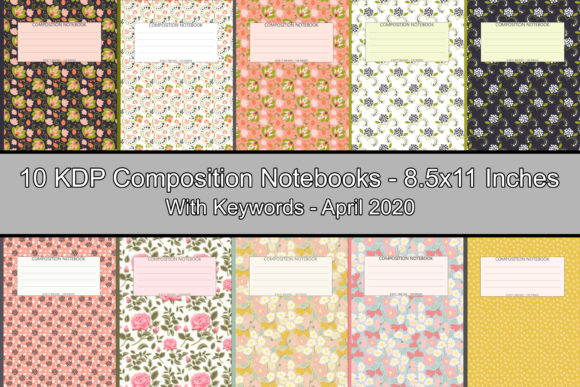
This brings us to a fascinating modern application: creating and selling custom composition notebooks as a business venture. Platforms like Amazon KDP allow individuals to design, publish, and sell physical notebooks with zero inventory risk. This is where the classic format meets contemporary opportunity. The provided 10 KDP-ready composition notebook covers and the accompanying file with 100 keywords for Amazon KDP are practical tools for entering this space.
The non-editable PDF covers represent a starting point—professional, themed designs that can be uploaded directly to KDP. They show how the iconic marbled pattern can be transformed into anything: vibrant abstract art, serene nature scenes, motivational quotes, niche hobby themes (like gardening or gaming), or sophisticated minimalist designs. The college-ruled interior is a safe, popular choice that appeals to the broadest audience, from high school students to office professionals.
Keywords and SEO: Speaking to Your Potential Customer
The list of 100 keywords is not just a random collection; it is a strategic map of customer search intent. On Amazon, a buyer might search for “college ruled composition notebook,” “hardcover writing journal,” “project planning notebook,” or “marbled cover journal.” These keywords inform both the product listing title and its backend search terms. Using them effectively means your notebook appears when someone is actively looking for that exact type of product. Understanding and utilizing these keywords aligns directly with informational and commercial search intent—first helping the customer understand what they need, then presenting your product as the solution.
For example, a keyword like “composition book for school supplies” targets a clear, seasonal market. “Creative writing journal hardcover” targets a different, but equally passionate, audience. The savvy creator can even use these keywords to inspire new cover designs, ensuring the product visually matches what the customer is verbally searching for.
Building a Broader Understanding: The Notebook as a Cultural Symbol
To fully appreciate the composition notebook, we must see it beyond its pages. It is a symbol of beginning. A fresh notebook represents a new project, a new semester, a new chapter in life. It signifies commitment—the act of filling it page by page is a record of perseverance. In popular culture, it is often depicted as the tool of the insightful detective, the brilliant scientist, or the passionate poet. It carries an aura of seriousness and authenticity.
In business and education, providing a custom composition notebook can be a powerful branding tool. A company might create notebooks with their logo for employees, fostering a culture of note-taking and idea-sharing. A university club might use custom notebooks as membership items. This transforms the notebook from a personal tool into a communal one, strengthening identity and shared purpose.
Practical Relevance: Choosing and Using Your Notebook
For the general reader or consumer, selecting the right composition notebook involves a few considerations. Purpose is key: Is it for heavy daily journaling, occasional project notes, or as a gift? The classic college-ruled, sewn-bound version is excellent for general writing and longevity. For those looking for something unique, the KDP marketplace now offers endless thematic covers, allowing you to choose a notebook that reflects your personality or interests—from “space exploration composition notebook” to “watercolor floral writing journal.”
To use it effectively, abandon the pressure to keep it “perfect.” Let it be a messy, honest workspace. Date entries, use it consistently, and don’t be afraid to combine lists, sketches, and long-form writing. Its strength is its capacity to hold multifaceted content in one organized, durable place.
Conclusion: The Enduring Power of a Simple Tool
The composition notebook, from its classic schoolhouse form to its modern, customizable incarnation on platforms like Amazon KDP, demonstrates a remarkable journey. It has maintained its core utility—providing a durable, dedicated space for written thought—while adapting to the needs and aesthetics of new generations. Whether you are a student organizing notes, a professional planning a business, an artist sketching concepts, or an entrepreneur designing a product to sell, the composition notebook remains a powerful, accessible, and meaningful tool. It bridges the gap between analog tradition and digital commerce, between personal reflection and public expression. In understanding its history, its purpose, and its potential, we unlock not just a better grasp of a stationery item, but a deeper appreciation for the physical anchors that help us navigate our ideas and our world.