Master Your Minutes: The Practical Power of a Pomodoro Planner & Tracker
In a world where distractions are a dime a dozen, finding focus can feel like a superpower. The Pomodoro Technique offers a simple, science-backed method to reclaim your time: work in 25-minute focused bursts followed by short breaks. While the concept is elegant, its success hinges on consistent practice. This is where a dedicated Pomodoro Planner and Pomodoro Tracker come into play, transforming a good idea into a tangible, daily habit.
Beyond the Timer: What is a Pomodoro Planner?
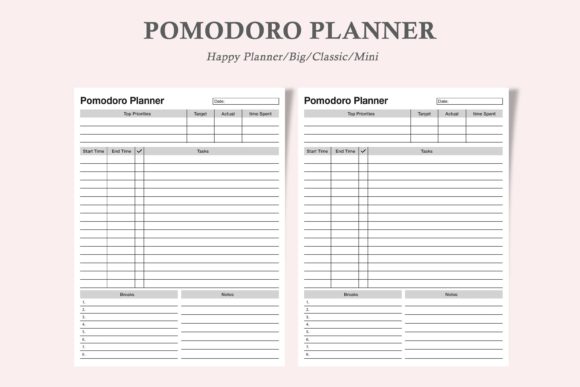
Think of a Pomodoro Planner as the strategic command center for your workday. It’s not just a timer; it’s a pre-work session tool designed for intention. Before you start your first 25-minute block, you use the planner to define your task, estimate how many "Pomodoros" (sessions) it will require, and note any preparatory steps. This upfront planning prevents mental fog and the "what should I do next?" paralysis. A good Pomodoro Planner provides a structured space to break down overwhelming projects into those digestible, 25-minute chunks the technique is famous for.
The Companion Piece: The Role of a Pomodoro Tracker
As you execute your plan, the Pomodoro Tracker becomes your logbook. This is where you record your actual progress. Did that task take three Pomodoros instead of the two you estimated? Did you get interrupted? Marking down your completed sessions provides invaluable data. Over time, this tracking builds a realistic picture of how you work, how long tasks truly take, and where your focus strengths and weaknesses lie. Together, the planner and tracker form a complete system: the planner sets the course, and the tracker maps the journey you actually took.
The Integrated Value: From Intention to Insight
The combined use of a Pomodoro Planner Pomodoro Tracker moves you from passive time management to active time mastery. The planning stage cultivates discipline and foresight, while the tracking stage cultivates awareness and accountability. You stop guessing about your productivity and start knowing it. This loop of plan-act-review is a cornerstone of professional growth, applicable whether you're coding a website, writing a novel, studying for exams, or managing household projects. It turns the abstract Pomodoro Technique into a concrete, personal workflow.
Key Features in Practice
Effective planners and trackers often share useful characteristics. A professional, minimalist design reduces visual clutter, keeping your mind on the task, not the tool. An ink-friendly layout is practical for those who prefer physical prints, saving on toner or ink. The ability to print a new page every time you need more makes the system sustainable and cost-effective, avoiding the need for expensive, bound notebooks. Flexibility in size, like versions for Happy Planner Big (8.5” x 11”), Classic (7” x 9.25”), and Mini (4.5” x 7”), ensures the tool fits your workspace, whether it's a desk, a kitchen table, or a backpack.
Who Benefits from This System?
The audience for a Pomodoro Planner and Pomodoro Tracker is vast because the need for focus is universal.
- Professionals & Remote Workers: Anyone battling work-from-home distractions or meeting deadlines can use the system to structure their day and provide proof of progress.
- Students & Lifelong Learners: Breaking study sessions into manageable blocks with recorded completion reduces burnout and improves retention.
- Creatives & Artists: Writers, designers, and musicians can overcome the inertia of starting a project by committing to just one 25-minute session, tracked on paper.
- Business Owners & Entrepreneurs: For those juggling countless roles, the planner/tracker combo helps isolate and attack specific business functions, from accounting to marketing, one Pomodoro at a time.
Real-World Scenarios and Applications
Imagine you need to draft a lengthy report. With a Pomodoro Planner, you might allocate: Pomodoro 1 - Outline main sections; Pomodoro 2 - Research for Part A; Pomodoro 3 - Write Part A. You then start your timer and begin. On your Pomodoro Tracker, you note when you actually finish writing Part A (maybe it took 2 sessions). Later, you see your estimate was off, teaching you to allocate more time for writing in future plans. Another scenario: a freelancer uses the tracker to log Pomodoros spent on different client projects, creating a simple basis for invoicing and time assessment. The system shines in making invisible work visible.
Evaluating Suitability for Your Needs
Is a printable Pomodoro Planner Printable Time Tracker right for you? Consider your style. If you are tactile and benefit from writing things down physically, a printed PDF or JPEG is ideal. It creates a ritual. If you live entirely digitally and need sync across devices, a digital app might complement or replace the paper. Also, assess your need for analysis. If you simply want to get things done, the planner is crucial. If you want to improve your efficiency over time, the tracker is indispensable. Many find the Pomodoro Timer (the clock) is just one component; the full value emerges from pairing it with the planning and tracking sheets.
Strengths and Practical Considerations
The strength of this system is its grounding in reality. It counters optimistic planning with actual data from the tracker, fostering better self-knowledge. Its paper-based, printable nature means no software updates, login issues, or complex setups—just a pen and a printout. However, it requires a degree of self-motivation. You must remember to use it and fill it out honestly. It's a manual system, so if you forget to track a session, the data is incomplete. For some, this manual engagement is part of the mindful practice; for others, it might feel like an extra step. The key is to integrate it seamlessly into your start-up and shut-down routines for each task.
From Theory to Tangible Tool
The Pomodoro Technique is a brilliant framework, but frameworks need structure to hold them up. A dedicated Pomodoro Planner and Pomodoro Tracker provide that structure. They take the principle of focused intervals and give you a place to prepare for them, execute them, and learn from them. Whether you choose a Big format for expansive projects, a Classic for portability, or a Mini for ultra-compact logging, the goal is the same: to transform your time from a fleeting resource into a measured, manageable, and mastered asset. By bridging the gap between intention and action, this simple duo of planner and tracker empowers you to not just work harder, but smarter.