The Monthly Budget Planner and Finance Tracker: Choosing the Right Tool for Your Financial Goals
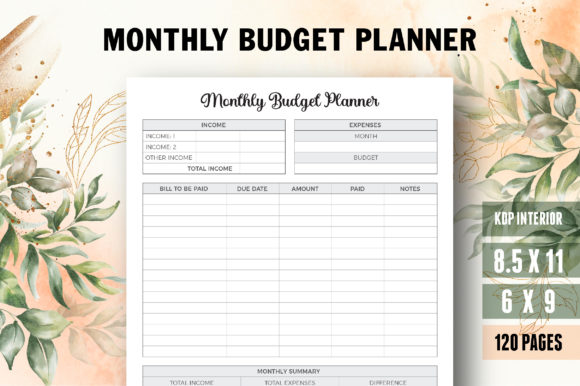
Navigating personal finances requires more than good intentions; it requires a system. For many, that system is a dedicated Monthly Budget Planner and Finance Tracker. This tool represents a physical, structured space to record income, expenses, savings goals, and spending habits over a set period, typically a month. Unlike a simple notebook or a digital app, a purpose-built planner combines the tactical act of tracking with the strategic framework of planning, encouraging users to look forward while accounting for the past.
What Distinguishes a Dedicated Budget Planner from Other Methods
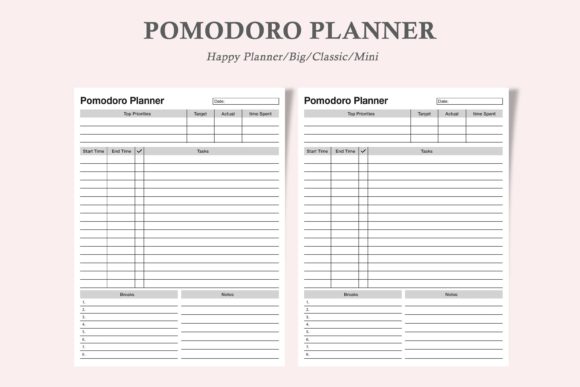
A well-designed Monthly Budget Planner and Finance Tracker is distinct in its integrated approach. It is not merely a logbook. Key sections often include a monthly budget overview, daily or weekly expense trackers, bill due date calendars, savings progress charts, and periodic review pages. This cohesive design prompts users to connect their day-to-day spending with their larger financial objectives, a link that can be missed with fragmented tools.
Consider the common alternatives: a generic spreadsheet or a financial app. Spreadsheets offer limitless customization but require setup time and discipline to maintain. Apps automate tracking but can sometimes distance users from a hands-on, reflective process. A physical planner occupies a middle ground. It offers a pre-structured format that reduces startup effort, while the act of manually writing figures can enhance mindfulness and retention of financial data. For individuals who benefit from tactile engagement and visual permanence, this is a significant advantage.
Comparing Formats: Digital vs. Physical and Prepared vs. DIY
The choice between a digital and a physical Finance Tracker often hinges on personal workflow and psychology. Digital tools excel in automation, complex calculations, and data portability. Physical planners, like the print-ready template described, excel in creating a ritual, reducing screen-time distraction, and serving as a constant visual reminder on a desk or shelf. They are also inherently private, with no data stored on servers.
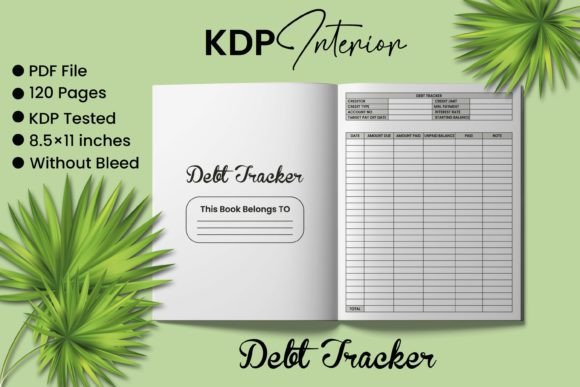
Furthermore, within the physical realm, users face another choice: purchasing a pre-made planner or creating their own. A pre-designed template, especially one offering editable source files, provides a professional structure that most DIY notebook attempts lack. It includes tested layouts for cash flow, debt repayment, and savings—elements that a novice might overlook. The tradeoff is flexibility; a DIY notebook can be altered instantly, whereas a pre-formatted template works best within its designed categories. For those seeking a balance, an editable file allows customization within a robust framework, making it a compelling hybrid option.
Key Features and Practical Considerations for Users
When evaluating a specific Monthly Budget Planner template, several features directly impact its utility. The mention of two paper sizes—8.5 x 11 inches and 6 x 9 inches—addresses different user needs. The larger size offers ample space for detailed entries and is standard for many home filing systems. The smaller size is more portable, akin to a notebook, suitable for those who wish to track expenses on the go.
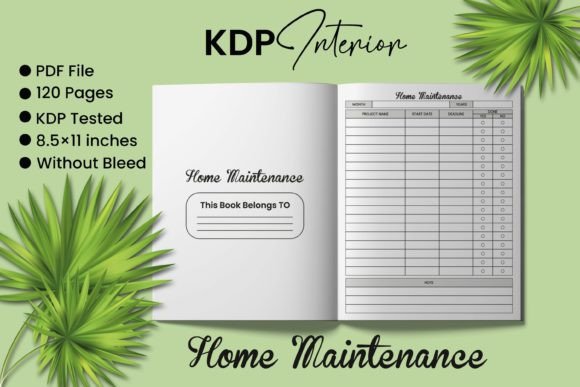
The inclusion of a bleed and high-resolution, print-ready PDF files speaks to quality for those considering print-on-demand platforms like KDP. This means the product is designed not just for use, but for professional reproduction. The 120-page count typically allows for a full year of monthly tracking plus supplementary pages, which is a practical duration for annual financial planning. The provision of source files (like AI format) is a notable feature for creators or resellers, enabling adaptation without starting from scratch, though it requires relevant software skills.
Strengths and Potential Limitations
The primary strength of a structured Monthly Budget Planner and Finance Tracker is its ability to build financial consistency and awareness. It simplifies the complex by breaking down finances into manageable, monthly segments. For visual learners, individuals overwhelmed by digital clutter, or those beginning their financial organization journey, this tangible method can be profoundly effective.
However, its limitations are tied to its medium. A physical planner cannot automatically sync with bank accounts or provide real-time alerts for overspending. It requires manual updating, which some may find tedious. It is also static; if your financial life involves hundreds of micro-transactions daily, the manual entry burden might be too high. In such cases, a digital tracker that imports data automatically might be a more efficient primary tool, with the planner serving as a monthly summary and goal-setting companion.
Identifying the Best Fit: When This Tool Is the Right Choice
A print-based Monthly Budget Planner is often the right choice in specific scenarios. If your goal is to develop a more mindful, intentional relationship with your money, the manual process fosters that. It is excellent for individuals or households with a moderate number of discretionary transactions, where categorization and review provide clear insights.
It is also highly suitable for project-based financial management. For example, saving for a specific goal like a vacation, a car, or a debt payoff plan over 12 months. The planner becomes a dedicated project log. Furthermore, for entrepreneurs, freelancers, or side-hustlers using print-on-demand platforms, such a template represents a ready-to-market product that meets a clear consumer need for financial organization tools.
Conversely, you might need another option if your financial tracking requires complex, real-time data analysis, collaboration with a partner in different locations, or integration with accounting software. In these cases, specialized digital platforms or software would be more appropriate. The physical planner could still play a role as a strategic overview tool, but it would not serve as the primary transactional ledger.
Making an Informed Decision: Factors to Evaluate
To decide if a pre-formatted Finance Tracker template is for you, consider these practical factors:
- Your Tracking Style: Do you prefer writing and reviewing on paper, or do you operate primarily in a digital ecosystem?
- The Complexity of Your Finances: How many income streams and expense categories do you manage monthly? A simpler structure benefits from a clear template; a highly complex one might need digital flexibility.
- Your End Goal: Are you using it purely for personal management, or are you considering publishing or selling the planner? Features like bleed, editable files, and KDP-testing become critical for the latter.
- Portability Needs: Will you track at home or need to carry it? The choice between 8.5 x 11 and 6 x 9 inches matters here.
Remember, the most effective financial tool is the one you will consistently use. A beautifully designed planner that feels like a chore will fail. A simple notebook you enjoy updating will succeed. The value of a professional template lies in removing design barriers and providing a guided path, potentially increasing that consistency.
Integrating a Planner into a Holistic Financial System
A Monthly Budget Planner and Finance Tracker does not have to be your only financial tool. It can effectively serve as the command center within a broader system. You might use a banking app for daily transaction monitoring and then consolidate data into your planner during a weekly review session. This combines automation with reflection.
For business purposes, such a template can be the final product offered to customers who themselves seek this balanced approach. By providing a clean, professional design with editable options, you cater to both end-users who want a ready-made solution and to creators who wish to tailor the product further, expanding its applicability across different needs and preferences.
Ultimately, the journey to financial control is personal. Whether a digital app, a homemade spreadsheet, or a professionally designed Monthly Budget Planner is your vehicle, the destination is the same: greater clarity, confidence, and command over your economic life. Assessing your habits, needs, and goals will point you toward the tool—or combination of tools—that makes that journey sustainable and successful.