The Debt Tracker Log Book: A Tool for Financial Awareness and Control
Managing personal debt is a common challenge, and the methods people use vary widely. From digital apps to simple spreadsheets, the goal is often the same: to gain clarity and control. A physical Debt Tracker Log Book represents a distinct approach within this landscape. It is a dedicated, paper-based journal designed for systematically recording debt details, payments, and progress over time. Its distinction lies not in automation, but in intentional, manual engagement with one's financial obligations. For many, the act of writing down each balance, payment date, and interest rate fosters a deeper level of financial awareness than passive digital tracking might provide.
Understanding the Format and Its Practical Design
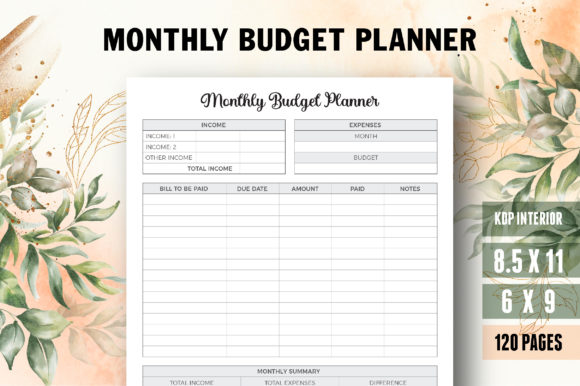
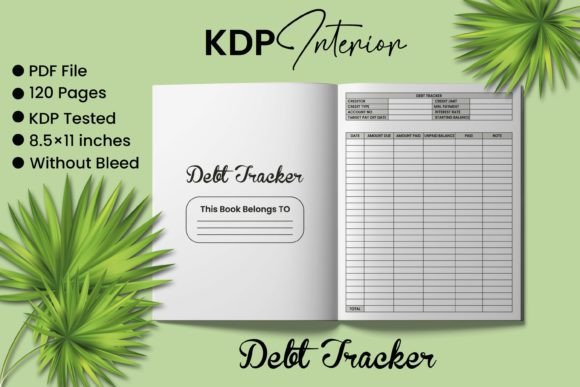
A typical Debt Tracker Log Book is structured as a workbook with pre-formatted pages. Common sections include entries for lender names, total balances, interest rates, minimum payments, due dates, and payment logs. Pages are often laid out to track multiple debts across a timeline, allowing users to see the bigger picture and individual accounts side-by-side. The physical format, often at 8.5x11 inches, provides ample space for detailed notation. The inclusion of high-resolution PDF and JPG files, as noted in available KDP interiors, indicates a product designed for clear printing or digital reference, catering to those who may prefer a hybrid approach.
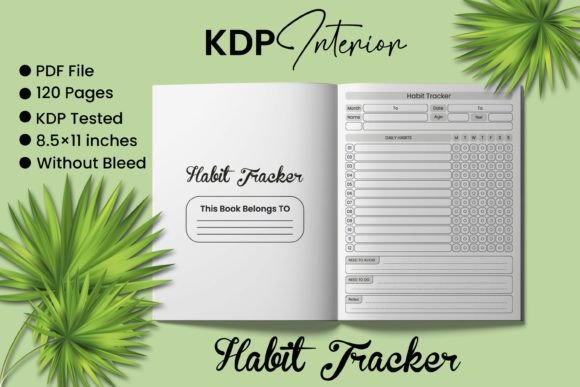
The design choice of an interior without bleed is practical for self-publishing and home printing, ensuring content fits standard margins without trimming. A 120-page count suggests substantial capacity for long-term tracking, potentially spanning years of a debt repayment journey. This contrasts with a notepad or blank journal, where the user must create the structure themselves, and with some digital tools that may limit historical views or become subscription-based.
Manual Tracking Versus Automated Solutions
A core comparison emerges between using a Debt Tracker Log Book and employing digital debt management apps or software. Automated solutions offer convenience: they can sync with accounts, calculate payoff timelines, and send reminders. They are excellent for those who prioritize speed and integration. The Debt Tracker Log Book, however, requires active participation. Each entry is a conscious act. This can transform the process from a background task into a regular financial ritual. For individuals seeking not just data aggregation but behavioral change, the manual process can reinforce commitment and mindfulness.
The tradeoff is clear. Automation saves time and reduces manual error in data entry. Manual logging in a Debt Tracker Log Book demands discipline and time investment. Yet, that investment can lead to a more intimate understanding of one's debt profile. You are not just reading numbers from a screen; you are writing them, which can make the figures more tangible and the repayment goal more personal. It's a tool best suited for those who are motivated by hands-on methods and who may find value in disconnecting debt management from the constant digital ecosystem of their lives.
Evaluating Fit: When Is a Log Book the Right Approach?
Choosing a debt tracking method depends heavily on personal habits, psychological preferences, and the complexity of the debt situation. A Debt Tracker Log Book can be a strong fit in several scenarios.
First, for visual learners and those who benefit from writing things down, the physical act of filling the log can solidify understanding and commitment. Seeing pages fill with payment records provides a visual, tangible progress indicator that a graph on an app might not. Second, for individuals with multiple, varied debts (such as credit cards, personal loans, and medical bills) that aren't easily linked to a single aggregator app, a central log book offers a unified, customizable view. You control the categorization.
Third, it serves those wary of linking financial accounts to third-party apps due to security preferences. The log book is a private, offline record. Fourth, it can be an excellent companion tool even for those using digital methods. The log book can act as a monthly review document, where insights from digital tools are summarized and reflected upon, bridging the gap between automated data and personal strategy.
Limitations and Situations Calling for Alternatives
A Debt Tracker Log Book is not a universal solution. Its limitations become apparent in specific contexts. For individuals with dynamic debt where balances and rates change frequently (e.g., active trading margins or complex business lines of credit), manual updating can become cumbersome and prone to lag. Real-time tracking requires digital solutions.
Similarly, for those who need complex mathematical projections—like calculating the exact impact of extra payments on different payoff methods (avalanche vs. snowball)—a log book alone is insufficient. It records history and current state, but advanced forecasting requires calculators or software. In these cases, the log book might be used alongside such tools for record-keeping, not for analysis.
Furthermore, if the primary goal is convenience and minimal time expenditure, a well-designed app will likely outperform a physical Debt Tracker Log Book. The need for regular manual entry can become a burden if discipline wanes. Therefore, an individual's consistency is a key decision factor. The log book thrives with routine.
Comparative Strengths: Tangibility and Psychological Impact
Beyond functional comparisons, the strengths of a Debt Tracker Log Book often lie in its psychological and behavioral impact. Financial management is not purely mathematical; it is emotional. Debt can cause stress and avoidance. A dedicated book transforms vague anxiety into a concrete, manageable process. It creates a single, authoritative place for all debt information, reducing the mental clutter of scattered statements and emails.
Completing a page after making a payment can provide a small sense of accomplishment, reinforcing positive behavior. This is different from an app notification, which may be quickly dismissed. The log book also serves as an unbroken historical record. Looking back through filled pages shows a narrative of perseverance, which can be motivating during long repayment journeys. For couples or families managing debt together, a physical book can also be a shared focal point for financial discussions, placed on a table during monthly budget meetings.
In terms of resource longevity, a well-made physical log book does not require updates, subscriptions, or electricity. It won't change its interface or become obsolete if a company discontinues a service. It is a stable, permanent tool, assuming the user maintains it.
Practical Examples of Use in Different Scenarios
Consider a practical example: an individual with three credit card debts and a car loan. Using a Debt Tracker Log Book, they would dedicate a section to each debt, listing the initial details. Each month, after making payments, they record the date, amount paid, and new balance. They might also jot notes—"Paught off a full $500 extra from side job." Over six months, they can flip pages and visually see balances decreasing, which directly reinforces their snowball method strategy.
In a different scenario, a person using a debt consolidation loan might use the log book differently. They track the single consolidated loan's balance, but also use additional pages to note the former debts that were closed, maintaining a record for their own reference. This helps them avoid reopening old accounts and celebrates the consolidation achievement.
For a small business owner tracking business-related debts separately from personal finances, a dedicated Debt Tracker Log Book for the business provides clear separation. It becomes part of the business's financial records, useful for annual reviews and planning.
Decision Factors for Choosing Your Tracking Method
When evaluating whether a Debt Tracker Log Book is the right resource, several factors should guide your decision.
- Your Engagement Style: Do you prefer hands-on, written activities, or do you favor automated, seamless digital processes?
- Security and Privacy Comfort: Are you comfortable with financial apps accessing account data, or do you prefer a completely offline record?
- Debt Complexity: Is your debt relatively static with a fixed number of accounts, or is it dynamic and complex, requiring frequent recalculations?
- Need for Advanced Analytics: Do you require sophisticated forecasting graphs and calculations, or is recording history and current status your primary need?
- Motivation Mechanism: Does tangible, visual progress motivate you more than digital notifications?
Balancing these factors will point you toward the method that not only tracks numbers but also supports your behavioral success. For many, a hybrid approach is optimal: using a digital tool for calculations and reminders, and a Debt Tracker Log Book for monthly summary, reflection, and long-term progress tracking. This combines convenience with mindfulness.
The Role of Ready-to-Use KDP Interior Files
For those interested in the physical Debt Tracker Log Book format, the availability of professionally designed, ready-to-upload KDP interior files offers a practical path. These files, typically provided as a high-resolution PDF in a ZIP archive, are tested for compatibility with self-publishing platforms like Amazon KDP. This means an individual can obtain a well-structured interior, print it professionally through a publisher, or even print it at home for personal use, ensuring the layout is clean and functional.
This option sits between buying a pre-printed log book off the shelf and creating one entirely from scratch. It provides the structure—the 120 pages, intro page, and formatted tables—while allowing for personal publishing control. It's a resource for those who want the specific design of a Debt Tracker Log Book but may wish to bind it themselves or have it printed in a particular way. Comparing it to blank notebooks, it saves design time. Comparing it to subscription apps, it becomes a one-time purchase for a permanent tool.
Ultimately, the choice of a debt tracking system is personal. A Debt Tracker Log Book represents a focused, tangible, and behavioral approach to financial management. It excels in creating awareness and providing a stable historical record. By understanding its design, comparing its strengths and tradeoffs to digital alternatives, and evaluating your own habits and needs, you can make an informed decision on whether this method will support your journey toward debt control and financial clarity.