The Meeting Plan Log Book: A Practitioner's Guide to Structured Success
In the modern professional landscape, meetings are both a vital tool for collaboration and a frequent source of inefficiency. The transition from ad-hoc discussions to purposeful, outcome-driven gatherings is a common challenge. This is where the concept of a dedicated Meeting Plan Log Book comes into focus, not merely as a notepad, but as a structured system for capturing, planning, and tracking the lifecycle of every meeting.
From Chaos to Clarity: The Core Function of a Log Book
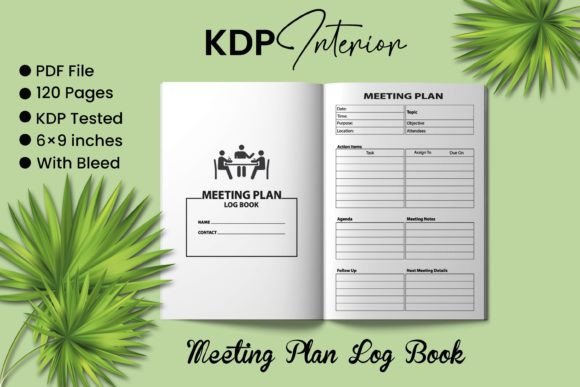
A Meeting Plan Log Book is fundamentally a specialized journal designed to preempt disorder. Unlike generic notebooks, it provides a consistent framework for each meeting entry. This typically includes pre-meeting sections for defining objectives, listing participants, and outlining agendas, followed by post-meeting areas for recording decisions, action items with assigned owners, and key takeaways. The "log" aspect implies chronological order and accountability, creating a linear, searchable history of organizational dialogue and decisions.
The physical or digital format forces a discipline that free-form note-taking lacks. By requiring users to fill in specific fields before a meeting even begins, it encourages proactive thinking. What is the desired outcome? What questions need answers? This shift from passive attendance to active orchestration is the first major advantage.
Characteristics of an Effective Log System
Examining a well-designed Meeting Plan Log Book reveals several key characteristics. Firstly, it is sequential and date-driven, providing a clear timeline. Secondly, it balances structure with flexibilityaction item tracking, often with checkboxes or status columns, turning verbal commitments into visual tasks. Finally, it serves as a unified repository, eliminating the scatter of loose papers, disparate digital files, and forgotten email threads.
For the creative professional or solo entrepreneur, this repository function is particularly valuable. It becomes a single source of truth for all client consultations, project check-ins, and strategic brainstorming sessions.
The Tangible Advantages for Diverse Users
The practical benefits of maintaining a Meeting Plan Log Book cascade across different user roles. For business owners and managers, it enhances accountability and follow-through, directly impacting project velocity. Missed deadlines can often be traced to ambiguous meeting outcomes; a log book clarifies those outcomes explicitly.
Educators and researchers conducting committee meetings, student advisements, or collaborative research sessions find the log book invaluable for documenting procedural decisions and assigning research tasks. It adds rigor to academic collaboration.
For hobbyists running club meetings or organizing community events, the tool provides a formal touchpoint that elevates casual gatherings into productive sessions with clear next steps. Even consumers managing complex family meetings, such as planning major purchases or coordinating care schedules, can use its principles to foster fairness and clarity in personal decision-making.
Real-World Applications and Workflow Integration
Consider a common workflow: a weekly team sync. Without a log book, the agenda might be a hastily typed email subject line. With it, the lead prepares a dedicated page, noting the primary goal to "resolve bottleneck in Phase 2," lists attendees, and pre-populates discussion points. During the meeting, notes are added directly under each point. Afterwards, action items—"Julia to contact vendor by Friday"—are logged in their dedicated box. The next week's meeting entry begins with a review of those boxes.
This creates a closed-loop system. The log book is not just a record; it is the agenda, the minute-taker, and the task manager. For implementation, the key consideration is habit formation. The first few meetings require conscious effort to use the book, but the payoff in reduced mental load and recovered time quickly reinforces the practice.
Beyond the Basics: Considerations for Selection and Use
Choosing or creating a Meeting Plan Log Book involves several considerations. Physical books offer tangibility and freedom from digital distractions, but lack easy searchability. Digital templates offer sharing and copying capabilities, but may succumb to tab-switching chaos. The interior design—the layout of fields, font size, spacing—directly impacts usability. A cluttered page can discourage use, while a clean, spacious layout with clear section headings promotes engagement.
This is where the availability of professionally designed, ready-to-use interiors becomes relevant for creators. For authors and designers looking to publish a physical log book on platforms like Amazon KDP (Kindle Direct Publishing), access to a high-quality, tested interior file saves significant time and ensures a professional product. A well-crafted interior, optimized for a specific trim size like 6x9 inches, with proper bleed for printing, a logical intro page, and a high-resolution 300dpi PDF, forms the backbone of a usable product. When such files are compressed into a ready-to-upload ZIP file, it streamlines the publishing workflow considerably.
The emphasis on a tested interior is crucial. An interior that has been validated on the actual publishing platform ensures margins, fonts, and graphical elements render correctly in the final printed book, guaranteeing the end-user receives a tool that is not only conceptually helpful but also physically reliable.
The Evolution of Meeting Documentation
Observing trends in workplace tools reveals a move towards hybridization. The future of meeting logs likely lies in systems that bridge physical and digital, perhaps with QR codes linking book entries to cloud tasks. However, the core principle remains: intentional, structured documentation precedes effective action. A Meeting Plan Log Book, whether a beautifully bound volume or a sleek digital template, institutionalizes that principle.
Its use cases extend into unexpected areas. A researcher might log interviews and fieldwork debriefings. A novelist might use it to plan chapter-review meetings with an editor. The adaptability stems from the universal need to give shape to conversation and extract measurable value from time spent together.
Implementing Your Own System
For those ready to implement, the path can start simply. One can begin with a basic homemade template in a current notebook, drawing boxes for agenda, notes, and actions. This prototype phase reveals personal preferences—do you need more space for attendees? Do you prefer a section for pre-meeting resources? This user feedback then informs the selection of a more permanent solution, whether purchasing a commercial log book or utilizing a downloadable, exclusive interior to create a custom one.
The act of consistently using a Meeting Plan Log Book cultivates a more deliberate professional mindset. It turns meetings from calendar obligations into documented milestones in a project's journey. Each logged page becomes a snapshot of collective intent and a map for future effort. In environments saturated with information and urgency, such a map is not a luxury; it is a necessity for navigating toward success.
Ultimately, the value of any tool lies in the change it effects. The Meeting Plan Log Book’s primary outcome is the transformation of discussion into directed, accountable work. It provides a tangible thread connecting what was said, what was decided, and what was done. For any individual or group seeking to maximize the return on their invested meeting hours, this structured approach offers a clear, proven path forward.