The Migraine Journal Tracker: A Strategic Tool for Personal Health Management
For millions of adults, migraines and severe headaches are not merely occasional discomforts but significant disruptors of daily life, impacting productivity, decision-making, and long-term well-being. The challenge often lies not just in managing the pain itself, but in identifying its elusive origins. A strategic approach to this problem can transform a reactive struggle into a proactive plan. The Migraine Journal Tracker is designed specifically for this purpose, serving as a practical instrument for data collection, pattern recognition, and ultimately, informed personal health strategy.
Beyond Symptom Recording: The Power of Intentional Tracking
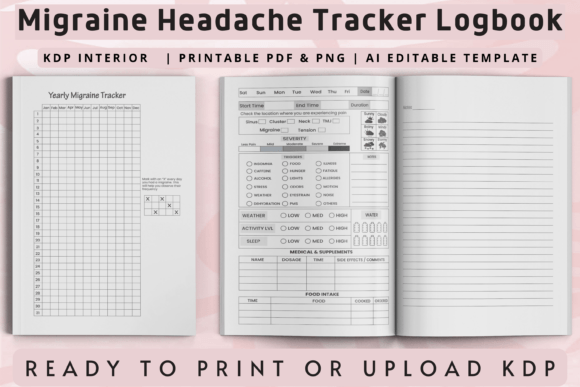
At its core, the Migraine Journal Tracker is more than a logbook. It is a structured framework that prompts you to document the multi-faceted context surrounding each headache episode. By systematically capturing data on date, weather, mood, severity, type, suspected triggers, and relieving measures, it moves you from vague recollection to concrete analysis. This shift from anecdote to evidence is the foundation of effective personal health management. For professionals, entrepreneurs, and creatives whose cognitive clarity and time are crucial assets, understanding these patterns is a direct investment in operational capacity.
The strategic utility of the Migraine Journal Tracker lies in its design to illuminate correlations you might otherwise overlook. For instance, a series of entries linking high-stress project deadlines with migraine onset provides actionable intelligence. It allows you to plan mitigation strategies—such as scheduled hydration breaks, adjusted lighting, or proactive stress-management techniques—around known high-risk periods. This turns a passive experience into a scenario you can plan for, thereby protecting your focus and output during critical work phases.
Key Features and Sections: A Blueprint for Insight
The tracker’s structure is thoughtfully divided into sections that guide comprehensive documentation. Each section serves a distinct strategic purpose:
- Date & Weather: Establishes a chronological and environmental baseline, helping identify seasonal or climatic patterns.
- Mood: Connects emotional state with physical symptoms, crucial for understanding stress or anxiety as contributory factors.
- Time and Severity: Provides data on frequency and impact level, essential for assessing the overall burden and planning healthcare consultations.
- Type of Headache: Differentiating between migraine, tension, sinus, or cluster headaches directs more targeted relief and prevention strategies.
- Suspected Trigger: This section is the heart of the investigation, listing common catalysts like stress, sleep deprivation, dehydration, specific foods, caffeine, smells, lights, and hormonal changes. Methodically checking these options trains you to observe your life through a lens of potential triggers.
- Relieving Measures & Notes: Records what actually worked, building a personalized toolkit of effective responses, and allows for free-form observations that might capture unique personal nuances.
The physical design of the tracker, formatted as a 6" x 9", 120-page, bleed-free book with editable source files included, makes it a practical, professional tool. Ready for Amazon KDP upload or home printing, it offers creators and small business owners a tangible product that serves a clear, underserved need in the health and wellness space.
Approaching the Tracker with Clear Goals
To derive maximum value, approach the Migraine Journal Tracker with intentionality. Begin by defining your primary objective: Is it to identify one primary trigger? To reduce frequency by 50% over three months? To provide your healthcare provider with concrete data for a diagnosis? A clear goal focuses your entries and analysis. Without this, tracking can become a rote, unfocused activity that yields little actionable insight.
Consistency is another critical consideration. The tracker's effectiveness depends on regular use, especially in the immediate aftermath of an episode and during "normal" days. Recording baseline data when you are well establishes a crucial comparative dataset. Think of it as maintaining a strategic ledger for your health; sporadic entries create gaps in the intelligence.
Practical Application in Daily and Professional Life
For the target audience of working adults, the Migraine Journal Tracker integrates directly into professional and creative routines. A freelance graphic designer, for example, might discover that prolonged screen time combined with low hydration consistently precedes a tension headache. The actionable outcome could be the implementation of a new operational rule: a five-minute break every hour with a glass of water. This directly supports sustained creativity and client delivery.
An educator tracking their episodes might find a pattern linked to specific classroom lighting or weekly grading marathons. The resulting strategy could involve a request for adjustable lighting or a revised grading schedule that incorporates more breaks. In both cases, the tracker enables a data-driven adjustment to workflows, enhancing long-term productivity and job satisfaction.
The Risks of Uncontextualized Use
While powerful, the Migraine Journal Tracker is not a standalone solution. A significant risk lies in using it without proper context or medical guidance. Self-diagnosis based on journal data can be misleading. The tracker is best used as a complementary tool to professional medical advice, providing your doctor or neurologist with a detailed, longitudinal record that far surpasses a verbal summary. Furthermore, an overzealous focus on tracking can sometimes create anxiety, potentially becoming a trigger itself. The tool should serve as an observer, not an obsessive auditor.
Another consideration is the interpretation of data. Correlation does not always equal causation. A journal entry linking a headache to "cheese" might be accurate, or it might coincide with a separate, unseen trigger like a change in barometric pressure that occurred the same day. The "Notes" section is vital here, allowing you to capture these ambiguities for later review and discussion.
Long-Term Value and Strategic Integration
The long-term value of maintaining a Migraine Journal Tracker accrues over months. As patterns solidify, your ability to predict and prevent episodes increases. This leads to better planning for important events—a crucial presentation, a family vacation, a creative project deadline. You gain agency over a condition that often feels uncontrollable. For the entrepreneur or marketer, this translates to fewer lost workdays, more consistent energy levels, and improved decision-making capacity.
Ultimately, the Migraine Journal Tracker encourages a mindset of strategic health management. It teaches you to treat your well-being as a system with inputs (triggers), outputs (headaches), and modifiable processes (relief measures). This systematic thinking is directly transferable to other areas of life and business, fostering a more analytical, proactive approach to challenges. By investing the time to track thoughtfully, you are not just logging symptoms; you are building a personalized knowledge base that empowers you to make better daily decisions and achieve more sustainable results in both health and productivity.