Transform Your Cleaning Routine with a Planner Log Book
For many, cleaning is a necessary but often chaotic part of life. Tasks pile up, schedules conflict, and that deep clean you planned for the weekend gets lost in the shuffle of daily demands. This is where the structure of a Cleaning Checklist Planner Log Book becomes a powerful tool. It transcends a simple to-do list, offering a systematic framework to track, schedule, and master household or workspace maintenance. By converting intention into organized action, it reduces mental clutter and turns upkeep into a manageable, even satisfying, process.
Beyond the Checklist: A System for Sustainable Habits
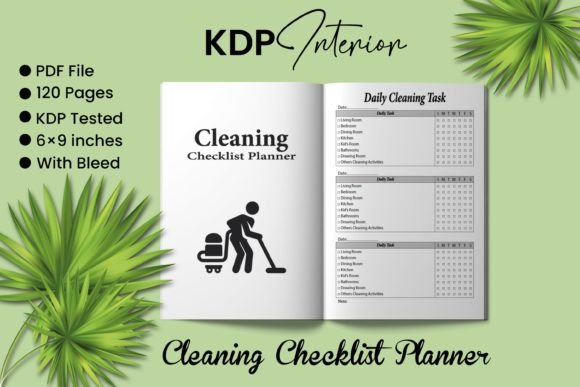
The core appeal of a Cleaning Checklist Planner Log Book is its dual function: planning and logging. The planning aspect allows you to proactively break down overwhelming projects—like seasonal cleans or room-by-room refreshes—into achievable steps. The logging component creates a record of completion, providing tangible proof of progress and insights into your routines. This feedback loop is crucial for building sustainable habits. You can identify what tasks consistently take longer, which areas need more frequent attention, and even schedule regular maintenance for appliances or deep-cleaning projects months in advance.
For the creative professional, entrepreneur, or freelancer, this system isn't just about a clean home. A tidy, organized environment directly impacts focus and productivity. Using a dedicated log book to manage cleaning tasks frees up cognitive space for work, ensuring your physical space supports your professional goals rather than distracting from them.
Adapting the Framework for Different Lives and Spaces
The versatility of a Cleaning Checklist Planner Log Book lies in its adaptability. Its blank slate structure invites customization to fit any lifestyle or type of space.
A busy family might use it to coordinate chore assignments among members, logging completed tasks to ensure fairness and accountability. They could create weekly rotations for different zones of the house, ensuring shared spaces like kitchens and living rooms receive consistent attention while personal rooms are managed individually.
An educator or small business owner managing a classroom or office could adapt the log book for commercial spaces. Sections could be dedicated to daily opening/closing procedures, weekly sanitization logs, or monthly maintenance checks for equipment. This not only ensures a professional environment but can also serve as an important record for health standards or operational protocols.
For the minimalist or efficiency-seeker, the log book becomes a tool for optimization. You can track how long tasks actually take versus your estimates, streamline your supply list by noting what products are used most effectively, and develop the most efficient sequence of tasks for your particular space.
Creative Applications and Project Expansion
The concept also sparks creative project ideas beyond personal use. Designers and content creators might see the template as a starting point for developing niche-specific variations. Consider a "Green Cleaning Log Book" that incorporates tracking for homemade eco-friendly product usage and waste reduction. A "Move-In/Move-Out Deep Clean Planner" could be tailored for renters or real estate professionals, providing a standardized checklist for property transitions.
Bloggers, publishers, and marketers could use the completed log book as a source of authentic content. A documented "30-Day Home Refresh Challenge" using the planner provides a real-world case study to share with an audience, offering practical insights rather than abstract advice. The physical log book itself, with its high-resolution interior ready for KDP publishing, is a prime example of a practical digital product that meets a clear user need—organization.
Ensuring Effectiveness Through Consistent Use
The potential of any planner is realized only through consistent application. To keep your Cleaning Checklist Planner Log Book effective, start with a simple, realistic weekly template. Avoid over-complicating the initial layout; you can always add monthly or quarterly project pages as you grow accustomed to the system. Use clear, actionable language for each task ("Vacuum living room carpets" vs. "Clean living room").
Color-coding or simple symbols can visually distinguish between daily, weekly, and monthly tasks, making the page easy to scan. The most important practice is regular review. At the end of each week or month, glance over your logged completions. This review is not for judgment, but for adjustment. It allows you to refine your schedule, celebrate progress, and ensure the system evolves with your changing needs.
From Digital Template to Physical Tool
The instant download of a professionally formatted Cleaning Checklist Planner Log Book KDP interior bridges the gap between digital convenience and physical utility. Receiving a ready-to-upload 6x9 inch PDF file, complete with bleed for printing and high-resolution quality, means creators or individuals can immediately produce a polished, functional tool. The 120-page structure offers ample space for long-term planning without being overwhelming, allowing for a full year of tracking with room for notes and special project pages.
This direct access to a tested KDP file empowers small business owners and hobbyists to create a tangible product or personal copy with minimal technical hassle. The compressed ZIP file containing the single, tested PDF simplifies the process, focusing effort on the application of the planner rather than its production. Whether you intend to publish it or print a copy for personal use, the readiness of the file turns inspiration into immediate action.
Ultimately, a Cleaning Checklist Planner Log Book is more than a list of chores. It is a framework for reclaiming time and attention. By externalizing the schedule and record of maintenance, it reduces the nagging background task of remembering what needs to be done. It provides a clear path from the current state of your space to your desired state of order. For the creative, the entrepreneur, the busy parent, or the organized hobbyist, it is a practical investment in a cleaner environment and a clearer mind, enabling you to direct your energy toward the projects and passions that matter most.